Where was Carlos Gardel from? A “simple question” and a century-old battlefield. Recently, a birth certificate surfaced indicating that Gardel might actually be Uruguayan. Just like that, the dormant fire of our neighborly rivalry was reignited.
To understand why this matters, you have to understand the context. Gardel’s birthplace is one of the facets of a much deeper debate between the neighbors separated by the Rio de la Plata. We are nations that act like siblings: we share an accent, a passion for beef and soccer, and a melancholy way of looking at life, yet we argue fiercely over the custody of our cultural heritage. We discuss over who invented the Mate, who makes the best Dulce de Leche, and yes, who can claim the most important voice in Tango history.
For decades, the tug-of-war over Gardel has pulled him between three possible origins: the official story that places his birth in France, the passionate claim that he was born in Uruguay, and the undeniable reality that he became a legend in Argentina. In this article, speaking as tango lovers who honor his legacy night after night, We won’t just look at the contradictory paperwork or the legal battles. Instead, we will analyze the debate through its many edges, listen to what his own lyrics revealed, and try to answer the questions that no document can truly resolve: Where was he really from? Can someone belong to more than one place?
Was Carlos Gardel Argentine or Uruguayan? What the Certificates Say
To understand the confusion, we have to look at the papers. And this is where the story splits into two contradictory paths.
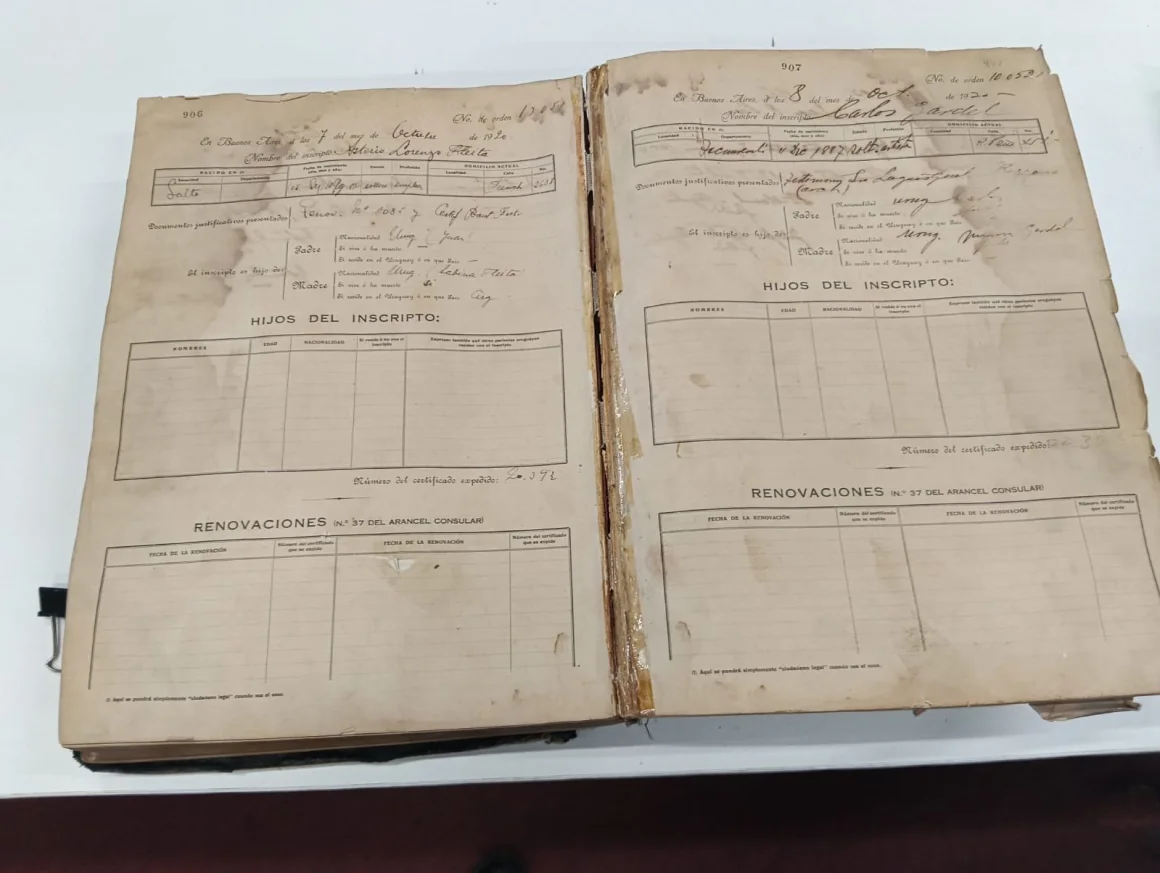
The New Document Linking Him to Uruguay
The argument for his Uruguayan birth relies heavily on a legal procedure from 1920. When Gardel applied for Argentine citizenship, he declared under oath that he was born in Tacuarembó, Uruguay, to parents Carlos and María.
However, this declaration has been met with skepticism by some specialists. As they point out, this document represents “a testimony of a specific moment,” reflecting what he claimed under certain circumstances and with a particular interest. In other words, it proves what Gardel stated to get his papers, but it does not necessarily constitute the truth.
What the Papers Say in France
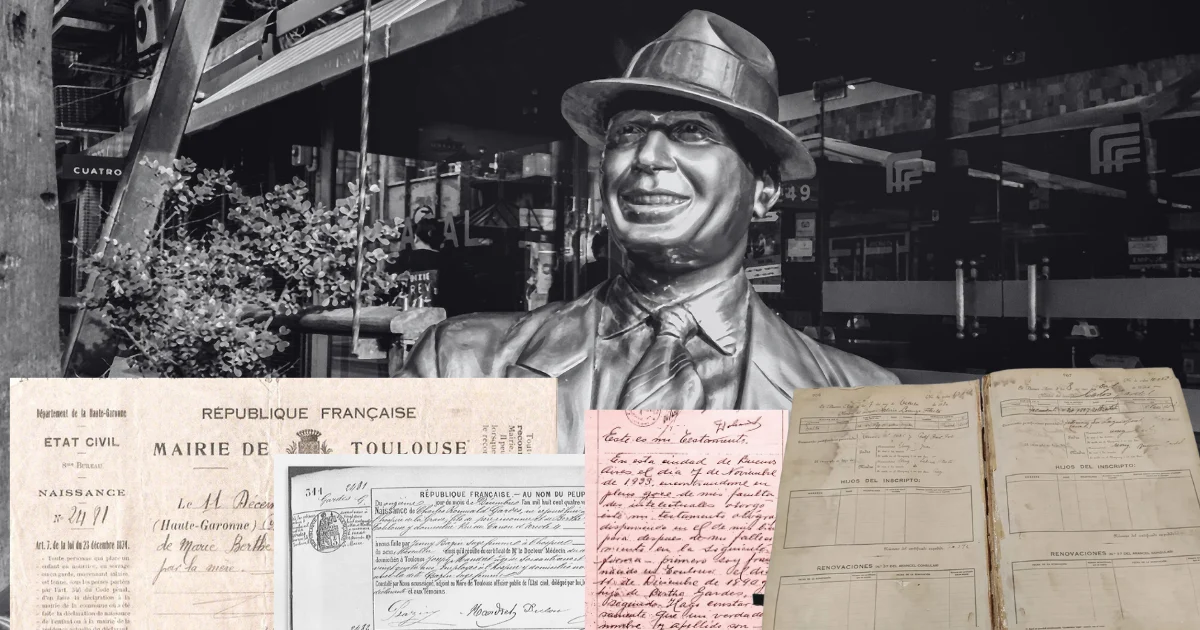
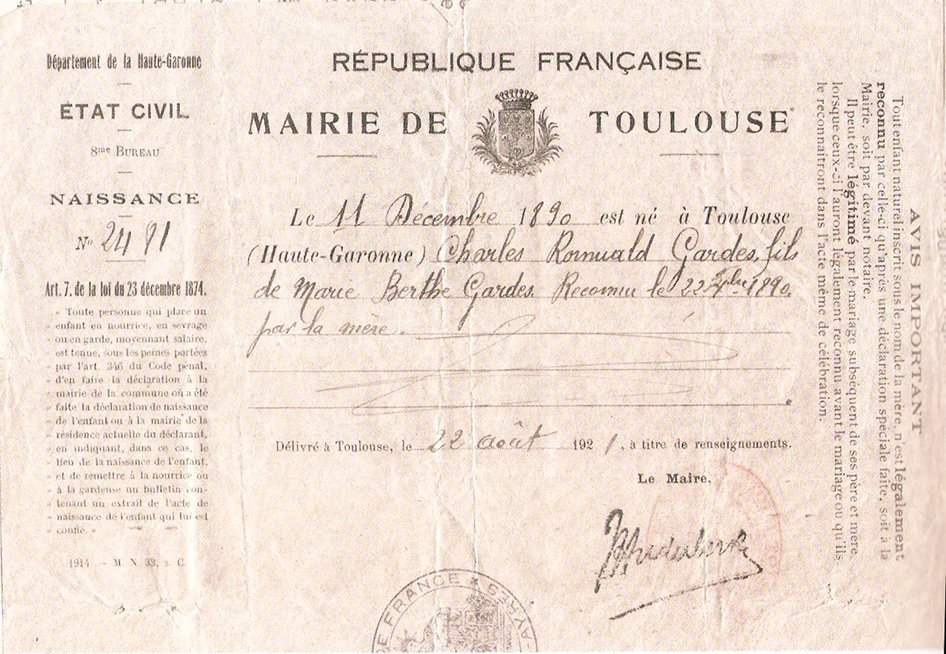
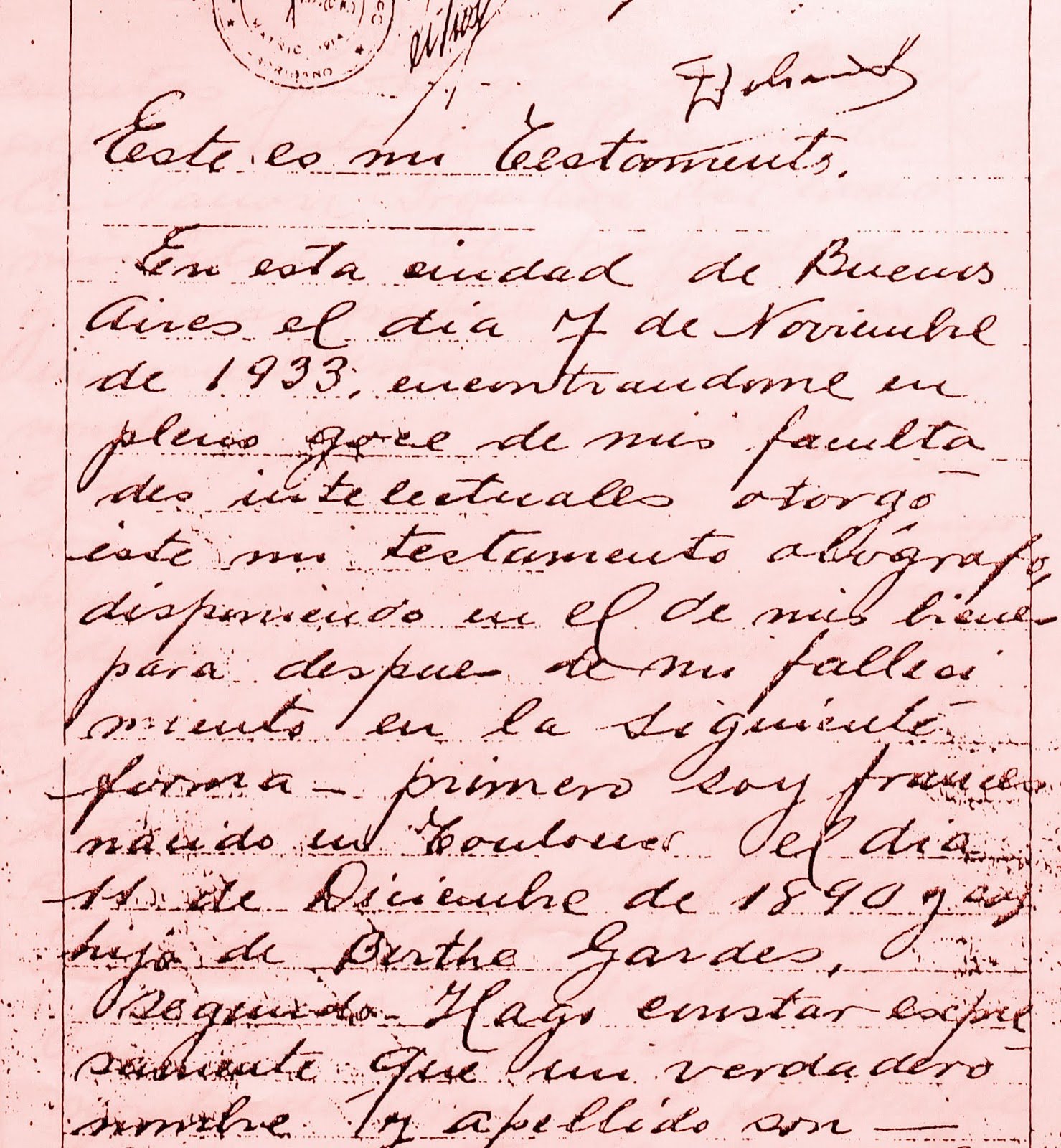
On the other side of the ocean, the administrative records tell a different story. A birth certificate from Toulouse, France, records the birth of Charles Romuald Gardes in 1890. This version is further supported by Gardel’s own handwritten will, where he listed his birth country as France.
So, we are faced with a contradiction. Did he lie in 1920 to get papers because he was an undocumented French citizen? Or did the French registry belong to someone else? The documents offer different truths depending on which one you choose to believe.
Argentina vs Uruguay: Siblings Fighting Over the Inheritance
I like to think of Argentina and Uruguay as two siblings who live in different houses but share the same backyard. As i already said, we are incredibly similar (it confuses the rest of Latin America). But, like many families, we fight over the inheritance.
It would be hypocritical of me to say I haven’t participated in this dynamic myself. Argentines, with our characteristic mix of sharp wit and borderline arrogance, love to joke that “Uruguay is just another Argentine province.” It takes nothing more than that phrase to make our neighbors furious, leading them to take the bait and step right into an argument that will probably never end. It’s a relationship built on a very thin line between brotherly love and rivalry.
What exactly do we fight about?
Where is the Mate From?
Is the origin Guaraní? Uruguayan? Argentine? The dispute over who owns the bitter infusion is perhaps the most daily battle. While the roots are indigenous and shared, both nations claim the “true” way of preparing and drinking it.
The truth is, when I travel abroad, people often ask me—sometimes just to poke the bear—“So, is the mate uruguayan or Argentine?”. The honest answer? I don’t know. The historical versions are diverse, and our roots are so intrinsically connected that the borders blur. But as a good Argentine, I will never admit that in public. Part of our charm is defending our narrative to the bitter end, protecting what we feel is ours.

Who makes the best Dulce de Leche?
A colonial dispute that will likely never be settled. We both claim to have invented the caramelized milk delicacy, and we both firmly believe ours is the superior version, so…
How many World Cup Stars does Uruguay have?
This is where soccer turns into a history lesson. Uruguay claims four world titles (counting the 1924 and 1928 Olympics organized by FIFA), while Argentina recognizes them as having only two World Cups. We argue over how many stars belong on the jersey as if our lives depended on it.
This is actually my favorite debate because we aren’t even discussing if a title belongs to us or not; we simply don’t want it to be theirs.
The Reality Behind
Seen from the outside, these might seem like superfluous debates, perhaps even senseless and childish. But they are a fundamental part of our culture. It is about delimiting what gives us pride, about feeling part of something, knowing it is uniquely ours.
I would say it is an emotional debate rather than a rational one. Sure, there are experts on both sides who can answer these doubts with historical foundations, but that happens on both shores, and we always return to the same stalemate. We likely keep this alive because there is something very Argentine about wanting to see ourselves represented, about showing off the glory of our soil. And also, there is the fact that we just like to argue. As for our “brothers from the East,” I won’t say a word—they can do their own mea culpa.

What Do Gardel’s Songs Say? The lyrical analysis
We can discuss Gardel’s birthplace forever. In fact, as Argentines, we don’t even need to enter that battle; we know Gardel wasn’t born on Argentine soil. But this does not mean he wasn’t Argentine.
Something we cannot argue with is his work. I truly believe there is nothing more transparent than art, and Gardel’s repertoire is a map of his affections.
Argentina, known as a land of opportunities, welcomed him as a child, and he gave back absolute reciprocity. He took Tango to glory and chose Buenos Aires as his muse, his stage, and his final home.
Mi Buenos Aires Querido
It might hurt some, but his most iconic anthem is titled “My Beloved Buenos Aires.” He never sang “My Beloved Toulouse” or “My Natal Tacuarembó.” When he expresses nostalgia, pain, or love, the destination is always the same. In this song, he isn’t just describing a city; he is describing a feeling of belonging. He sings about the desire to return, stating that when he sees the city again, “there will be no more sorrow or oblivion.”
Anclao en París
This tango, written by Enrique Cadícamo but immortalized by Gardel, is particularly ironic given the debate. The lyrics describe the anguish of being stuck in France, looking at the city with disdain and longing desperately to return to Argentina.
Although Gardel didn’t write the words, he chose to sing them with a visceral feeling. If the legal documents claim he is French, his interpretation says otherwise. In songs like this, he sounds like a prisoner in Europe, dreaming of the Porteño streets. His heart is invariably located in the barrio, the outskirts of Buenos Aires where the tango was forged.
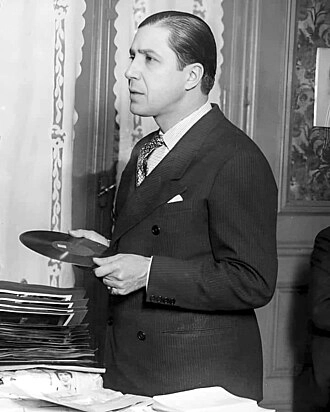
Estoy, Buenos Aires, ancla’o en París (Here I am, Buenos Aires, anchored in Paris)
Cubierto de mal, abandeado de apremios (Shrouded in misfortune, besieged by hardship)
Te evoco desde este lejano país (I call out to you from this distant land.)
Tierra Hermana
Even when he sang to Uruguay, he made a sharp distinction. His voice popularized the song “Tierra Hermana” (Sister Land), where he sings affectionately to “our brothers from the East” (nuestros hermanos orientales). The love was there, absolutely, but so was the definition of the relationship: Uruguay was a sister to love, not the motherland to return to.
Want to dive deeper into the life of “El Zorzal”? From his humble beginnings to the tragic accident in Medellín that turned him into a legend, explore our complete profile here.
Opinion: How Identity is Forged
Carlos Gardel officially naturalized as an Argentine citizen in 1923. We could say this was just a bureaucratic act, but that would be a reductionist view. The term identity is the key to analyzing this debate.
Leaving aside our perhaps childish (but culturally essential) debate with Uruguay, there is a reality that, at least to me, is crystal clear. Identity has two edges. On one side, there are the things we cannot choose: our ancestors, our place of birth, our socio-economic context, the language we speak as children. But on the other side, identity is composed of the decisions we make: where we go, who we become, what we study, and who we decide to love.
Maybe what bothers the most our neighbors across the river is Gardel’s life decision. He chose to be Argentine.
Could we say his naturalization was just a procedure? It could be argued, were it not for the fact that his entire body of work supports exactly the opposite. He didn’t just sign a paper; he adopted a homeland. There is a popular saying here: ‘An Argentine is born wherever he wants.’ Our nationality is not a geographical accident, but a destiny you choose to embrace.
However, as i said, the unchosen roots also speak of who we are. Beyond the papers and the borders, Tango is essentially Rioplatense. It was born in the shared mud of both riverbanks, in the crowded conventillos where people lived crammed together. To know the real tango is to understand that identity is a mix. It is the immigrant stepping off the boat with a suitcase full of fears, it is the Afro-descendant whose drums gave us the rhythm, the son of Europeans trying to find his place, and the Criollo of the land.
So, let’s go back to the initial questions: Can someone belong to more than one place?
The answer is yes, of course.
Gardel is the perfect summary of the tango mixture. He walked the French stages with absolute elegance. He sang to his (perhaps) Uruguayan compatriots with true brotherly love. And he put Argentina on the world map with his voice, becoming the eternal symbol of our culture.
We are talking about someone who loved and respected our roots. Notaries and researchers can keep talking about which hospital he was born in. But we, the people who love Tango, prefer to focus on the forged identity and the legacy he left us.
Where was Gardel from?
Gardel may have been born in Uruguay. Gardel surely chose Argentina. But Gardel belongs to the world.
Back to the Origins: Respecting Tango’s Identity
If we talk about respecting roots and choices, we must talk about the genre itself.
In a Buenos Aires often saturated with “For Export” shows—full of sequins and acrobatics designed for tourists—that identity is often polished until vanished. We see perfection where there should be feeling.
To truly honor the legacy of Gardel and the old guard, we need to go back to the source. At Secreto Tango Society, we are obsessed with that origin. We believe in vindicating the raw identity of Tango—the one born in the mud and the conventillos, the one that mixes the African drum with the European violin. Our experience isn’t a show; it is a tribute. We invite you to travel back in time, to share a glass of wine in intimacy, and to witness the tango as it was meant to be: visceral, imperfect, and profoundly human.

Are you ready to experience the actual Tango Identity? Book your seat with us!