To truly understand the history of tango, you need to look past the elegant stages of today and step into the gritty, overcrowded streets of the late 19th century. As locals who live and breathe this culture every night at Secreto Tango Society, we often see how the true origin of tango gets lost in romanticized myths.
Let’s dive into the fascinating timeline of how this underground rhythm transformed the cultural identity of Argentina forever.
Tango History: How the Dance Evolved
Before we dive in, it is crucial to understand one thing: like any powerful musical genre, tango didn’t just happen in a vacuum; it is entirely a product of its context. The history of tango in Buenos Aires goes completely hand in hand with the history of the city itself. They grew up together, they molded each other, and today, their identities are forever intertwined.
With that in mind, let’s debunk a myth right from the start: tango wasn’t born as an elegant ballroom dance. If you assume it always had to be polished, sophisticated, or similar to a European waltz, you’re missing out on the most real and fascinating part of its history.
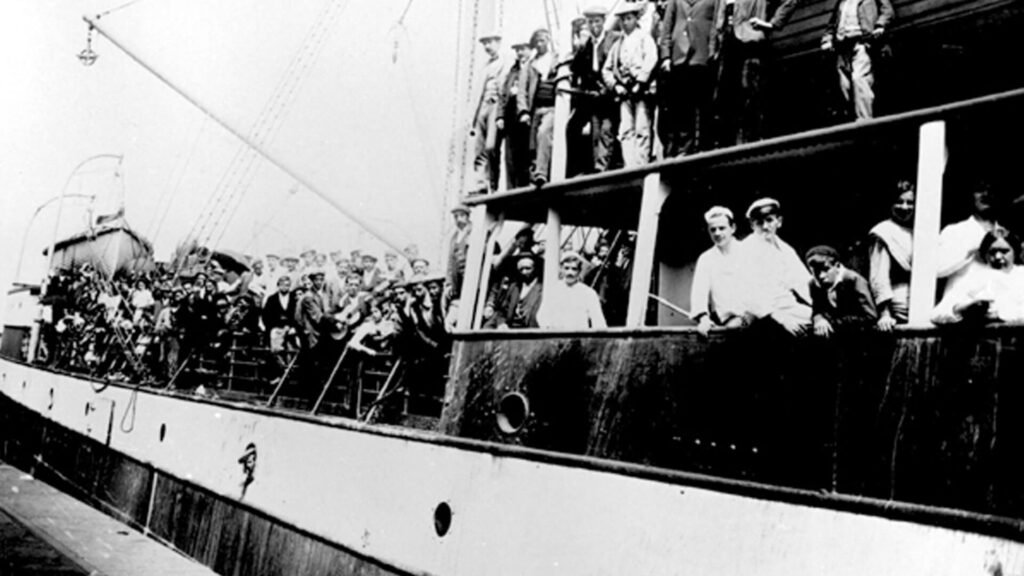
Tango was born in absolute rawness, marginality, and sensuality. Far from being a flaw, that rawness is a direct reflection of our historical conditions and who we truly are. Long before it reached brightly lit stages, it was the visceral expression of immigrants and the working class crammed into the conventillos (tenement houses) and rough port districts of Buenos Aires.
Make no mistake on this… the history of tango is not a story of how a street dance was “civilized” to become sophisticated. It’s about how a raw, authentic expression managed to conquer the entire world while keeping the soul of its origins completely intact.
The Early Years: Street Corners and Rebellious Rhythms
In its earliest stages, tango was a physical, almost rebellious expression belonging exclusively to the marginalized sectors. Because of its origins in the ports and a severe shortage of women due to the heavy immigration waves, tango was mostly danced by men. They practiced together on street corners to perfect their complex and provocative steps before heading to the local milongas. The focus was entirely on the rhythm, the skill, and the physical connection, rather than telling an emotional story.
The Parisian Boom: International Validation
So, how did it go from the back alleys to becoming a global phenomenon? In the early 20th century, tango crossed the Atlantic and landed directly in Paris. To the surprise of many, the elegant Parisian salons became completely obsessed with the rhythm. It was only when the elites of Buenos Aires saw this fascination in Europe that they finally decided to accept the dance in their own country. Tango returned to Argentine high society legitimized, but the seed of its rhythm had already conquered the world.
The Birth of “Tango Canción”: When the Dance Found Its Voice
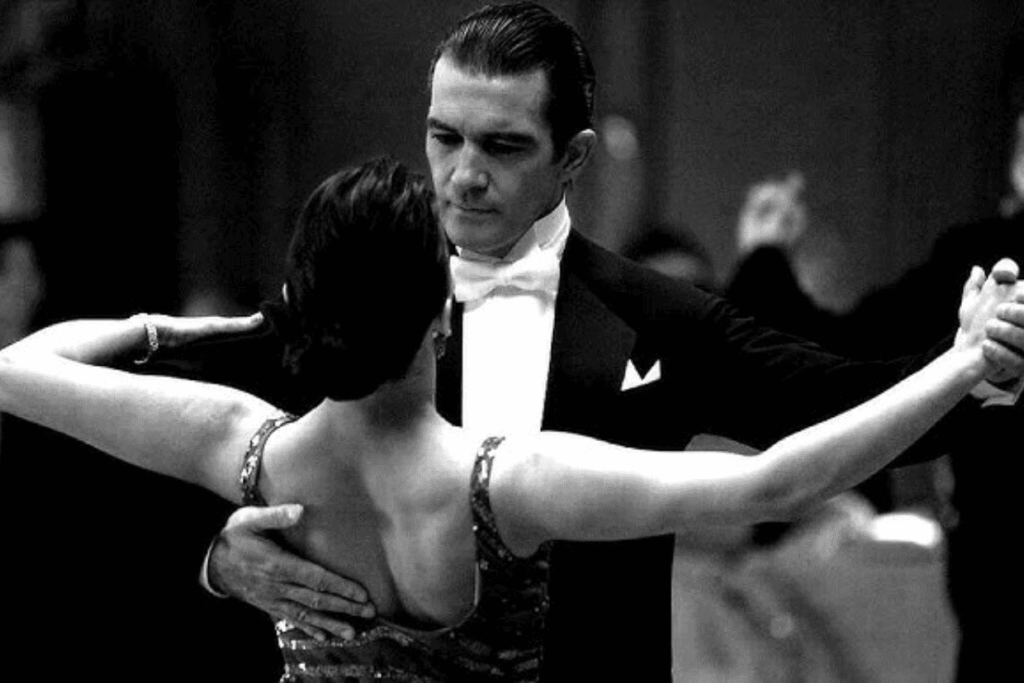
As the genre gained ground, the music itself transformed. Early melodies were mostly instrumental or featured playful lyrics filled with street slang. Over time, however, Tango Canción (Tango Song) was born. The lyrics took a massive turn, adopting a deeply introspective and poetic tone: love, loss, betrayal, and nostalgia became the absolute central themes.
Ready to listen?
Explore our handpicked list of the most Famous Tango Songs and uncover the powerful lyrics that shaped the identity of Buenos Aires.
The Golden Age: Tango’s Absolute Prime
Between the 1930s and 1950s, tango hit its peak, transforming from a street hobby into a massive, highly professionalized industry (think of the pop music of its day). Grand orchestras packed local dance halls and embarked on grueling worldwide tours, which was a massive, exhausting feat long before the era of modern flights. This period turned local milongas into legendary spaces.
Iconic Tango Figures: Singers and Dancers Who Shaped the Genre
The history of tango in Buenos Aires would not be the same without the legendary performers who gave it a face, a body and a voice. While thousands of musicians contributed to the genre, these are a few key figures you need to know.
Carlos Gardel
I’ll admit it right now: Carlos Gardel is my personal favorite tango artist, and without a doubt, the most famous figure in our country’s history. Before Gardel, tango was mostly instrumental. But with his deep, profoundly emotional voice, he brought the poetry of tango to life and became an international superstar (keep in mind that wasn’t easy at the time). His renditions of songs like “Mi Buenos Aires Querido” captured the very essence of the city. Even after his tragic death in a 1935 plane crash, he remains the ultimate, untouchable symbol of the genre.
There is so much myth and mystery surrounding his life (including where he was actually born). Dive into the legend in our dedicated article about Carlos Gardel.
Revolutionizing the Dance
In the world of physical performance, the legendary partnership of Juan Carlos Copes and María Nieves revolutionized tango choreography. Together, they took the intimate, close-embrace street dance and transformed it into a dynamic, theatrical expression. Copes blended complex footwork with intense emotional storytelling, while Nieves brought a raw, undeniable passion that captivated audiences worldwide. They set the modern standard for what a tango performance could be.
The Masters of the Golden Age Orchestras
While the singers were the face of tango, the orchestras were its beating heart. You cannot talk about the Golden Age without mentioning Aníbal Troilo, the ultimate master of the bandoneón.
But the dance floors needed variety. If you wanted to dance until your feet bled, you waited for Juan D’Arienzo, famously dubbed “The King of the Beat” (El Rey del Compás), who injected a fast, electric rhythm that brought life back to the milongas. And then there was Osvaldo Pugliese, an absolute giant who brought a profound, dramatic, and almost cinematic tension to the music. To this day, musicians consider Pugliese a patron saint of tango.

The Storytellers of the Streets
Gardel paved the way, but other massive voices captured the grit and heartbreak of Buenos Aires in the decades that followed. Julio Sosa, known as “El Varón del Tango” (The Man of Tango), brought a booming, unapologetically fierce energy that made him a massive star in the 1950s and 60s.
Then there was Roberto Goyeneche, “El Polaco”, a master storyteller. He had this incredible, almost conversational way of phrasing the lyrics.
Women in a Marginal World
When people talk about tango history, they usually list men. But think about it: this was a marginalized, gritty genre born in rough districts during an era when women’s voices were actively silenced. It’s crazy how little is said about the women who helped build this culture.
Despite the heavy machismo of the time, fierce women broke through the barriers. From groundbreaking singers and bandoneon players to lyricists, women brought a completely different, fiercely independent perspective to the music that changed its trajectory forever.
We refuse to let their stories be forgotten. Discover the trailblazers who defied society in our deep dive into the Women in Tango.
The Revolutionary Astor Piazzolla
Finally, we can’t talk about tango history without Astor Piazzolla. While the legendary orchestras were strictly playing for the dancers, Piazzolla decided to tear up the rulebook. He infused traditional tango with classical dissonance, jazz harmonies, and even electric guitars, creating a completely new genre known as Tango Nuevo.
Conservative purists absolutely hated him for it, famously calling him a traitor who was ruining the music. But to me, Piazzolla was a visionary.
Tango today…
Today, tango continues to thrive in Buenos Aires, with both traditional and modern interpretations coexisting. The city’s famous milongas, remain essential venues in the city.
At the same time, contemporary performances have evolved, blending tango with theater, ballet, and even modern dance. New sounds have also emerged: electronic tango artists like Gotan Project and Bajofondo brought a fresh twist to the genre, merging classic bandoneón with digital beats and global influences. And with international tango festivals attracting dancers from all over, the spirit of tango keeps expanding while staying deeply rooted in Buenos Aires.
If you’re interested in how tango has evolved into so many different forms, withouth losing its essence, check out our article on tango today. You will find traces of a very Argentine characteristic: the ability to reinvent itself.
Living Tango History: Returning to the Essence at Secreto Tango Society
As it has become clear at this point, throughout the history of tango in Buenos Aires, it never stopped evolving. That ability to adapt is exactly what keeps it alive. But while we celebrate that evolution, our mission at Secreto Tango Society is to return to the core.
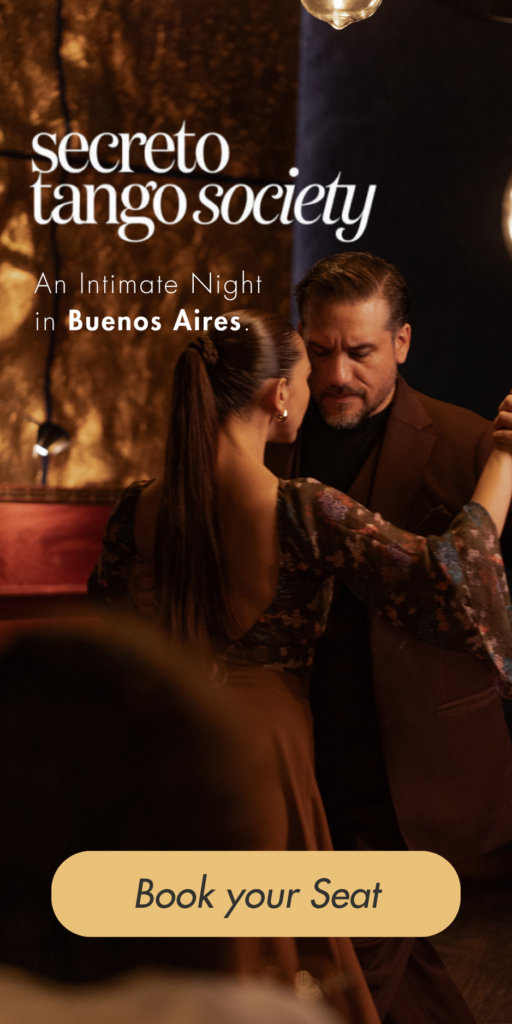
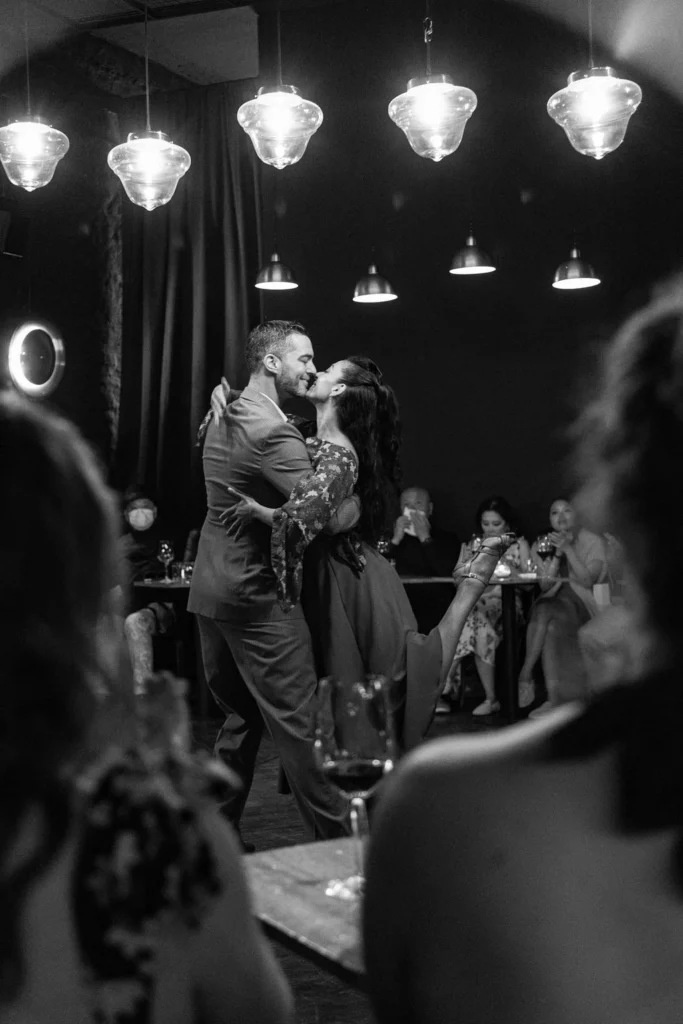
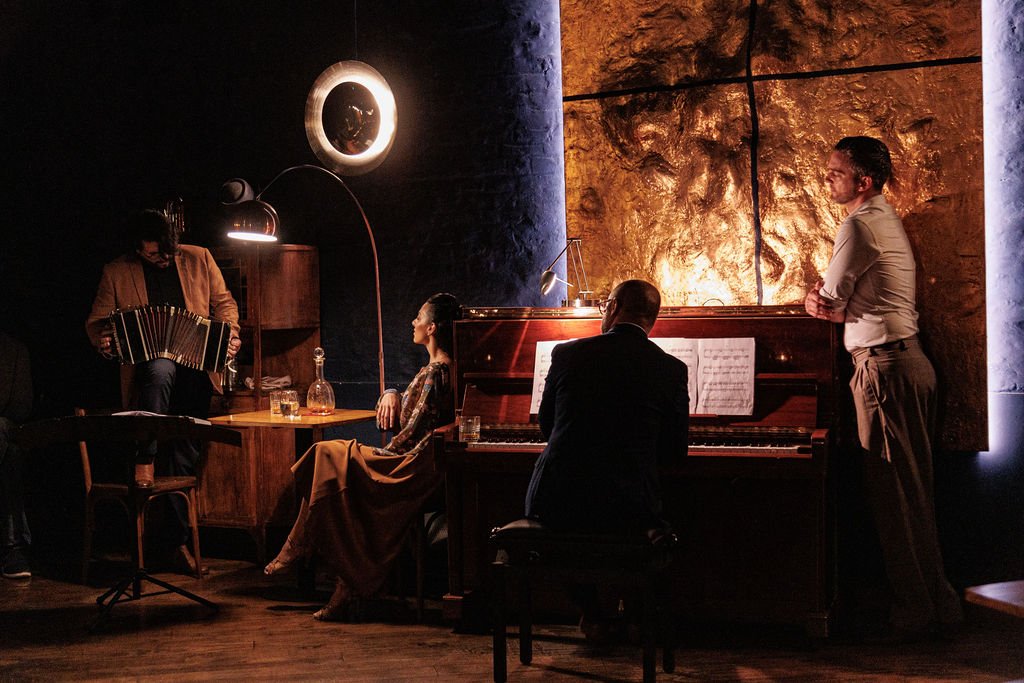
We want to take you back to the visceral essence. To do that, we reject the massive, Broadway-style tourist productions filled with exaggerated acrobatics. Instead, we offer a fiercely intimate, underground performance limited to just 20 seats per night.
In this exclusive setting, you aren’t just watching a show, but are dropped right into the emotional center of the dance. You are close enough to hear the acoustic breath of the bandoneón, feel the real tension between the dancers, and experience the unfiltered intensity of the genre.
Why Choose the Secreto Experience?
- Exclusive & Intimate: A strictly limited audience of 20 ensures a genuine, up-close connection with the artists that large productions simply cannot offer.
- Genuine & Passionate: We stay grounded in the raw origins of the dance, prioritizing deep emotional storytelling over extravagant spectacle.
- For Everyone: Tango transcends language. You don’t need to speak a word of Spanish to be completely captivated by the art form.
FAQs on Tango history
Where did tango originally come from?
The origin of tango traces back to the late 19th century in the marginalized, working-class neighborhoods and port districts of Buenos Aires and Montevideo. It was created by a diverse mix of European immigrants, African-descendant communities, and local criollos who lived together in crowded tenement houses.
Why was tango considered scandalous in its early history?
In the early history of tango in Buenos Aires, the dance was viewed with intense moral disdain by the upper classes. Because it was born in rough back alleys, local bars, and brothels, it was considered a vulgar and rebellious expression of the lower classes. The close embrace and intertwined legs were seen as highly provocative. The Argentine elite only accepted tango decades later, after it had crossed the Atlantic and become a massive sensation in elegant Parisian salons.
When was the Golden Age of Tango?
The Golden Age of Tango took place between the 1930s and 1950s. This was the absolute peak of tango history, where the genre transformed from an underground street dance into a massive, highly professionalized music industry. During this era, legendary orchestras led by icons like Aníbal Troilo, Juan D’Arienzo, and Osvaldo Pugliese cemented tango as an internationally acclaimed cultural phenomenon.