If you’ve ever listened to authentic tango music, you’ve heard the bandoneon. It’s the instrument that defines the genre, providing its characteristic sound: a sound that feels like it’s breathing, full of drama and deep melancholy.
Many first-time visitors to Buenos Aires see it and ask, “Is that an accordion?” The short answer is no. While they are cousins, the bandoneon is a unique instrument with its own complex story. This guide will walk you through the real bandoneon vs accordion difference, the surprising background, and how masters like Piazzolla used it to define Argentine culture
The Unmistakable Voice: Bandoneon vs Accordion
This is the most common question, and the differences are crucial to understanding the sound of tango.
- Sound and Buttons: The accordion often has a bright, consistent sound and a familiar piano-style keyboard on one side. The bandoneon sounds darker, more complex, and has intricate button fields on both sides.
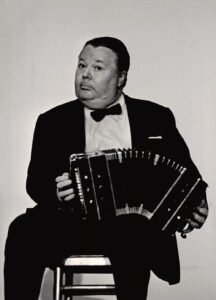
- The “Bisonoric” Soul: This is the key (and sounds a little bit crazy to me). Most accordions are unisonoric (playing the same note whether you push or pull the bellows). The classic bandoneon is bisonoric, which means that produces a different note for each button depending on whether the bellows are opening or closing.
- Why it Matters: This bisonoric nature is exactly what makes the bandoneon so incredibly expressive, allowing for the sharp accents (marcato) and dynamic phrasing vital to tango music. It’s also what makes it notoriously difficult to master.
Its history: a German Instrument with an Argentine Heart
The history of the bandoneon is a classic story of migration. It wasn’t invented in Argentina. It was born in 19th-century Germany, credited to Heinrich Band (who combined his name with “accordion”).
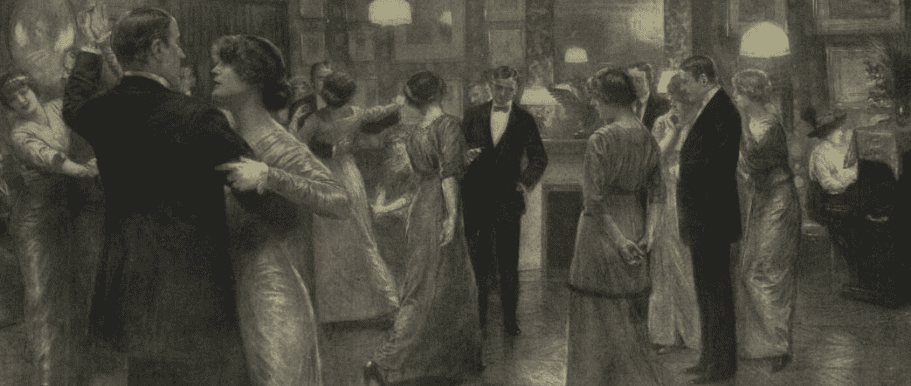
It arrived in the bustling ports of Buenos Aires and Montevideo in the hands of German and European immigrants. In the working-class neighborhoods and conventillos (tenement houses), local musicians—a mix of immigrants and criollos—adopted this German folk instrument. They discovered its melancholic, rich sound was the perfect voice for their new, emerging genre: the tango.
Want to dive deeper into tango history? Read our complete article here.
The Masters Who Defined the Sound: From Troilo to Piazzolla
The instrument was just a “tool” until the Golden Age (1930s-1950s), when masters turned it into a voice.
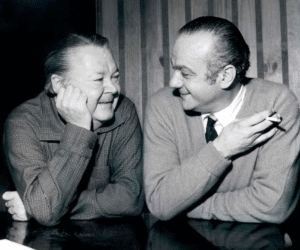
- Aníbal Troilo (“Pichuco”): Perhaps the most beloved bandoneonist of the Golden Age, Troilo was a virtuoso who played with profound, heart-wrenching emotion. His orchestra defined the sound of the era.
- Astor Piazzolla: The great revolutionary, Piazzolla (who actually played in Troilo’s orchestra), took the Bandoneon to a new level. He famously fused Tango Music with classical elements and jazz, challenging traditions and taking the instrument from the dance hall to the concert hall. His work cemented the instrument as a powerful symbol of Argentine identity.
Where to Hear Authentic Tango in Buenos Aires
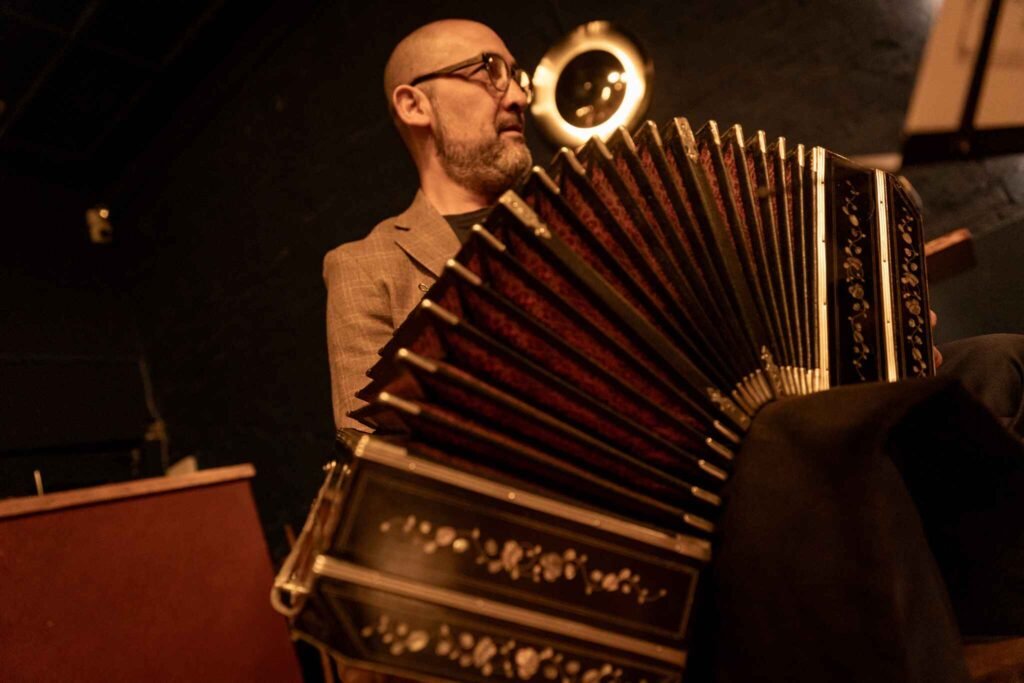
As it happens with everything, it is not the same reading about it, than actually live, enjoy and listen to it. The authentic, breathing (because in some way its movement resembles that) sound of the bandoneon is one of the foundations of Secreto Tango Society.
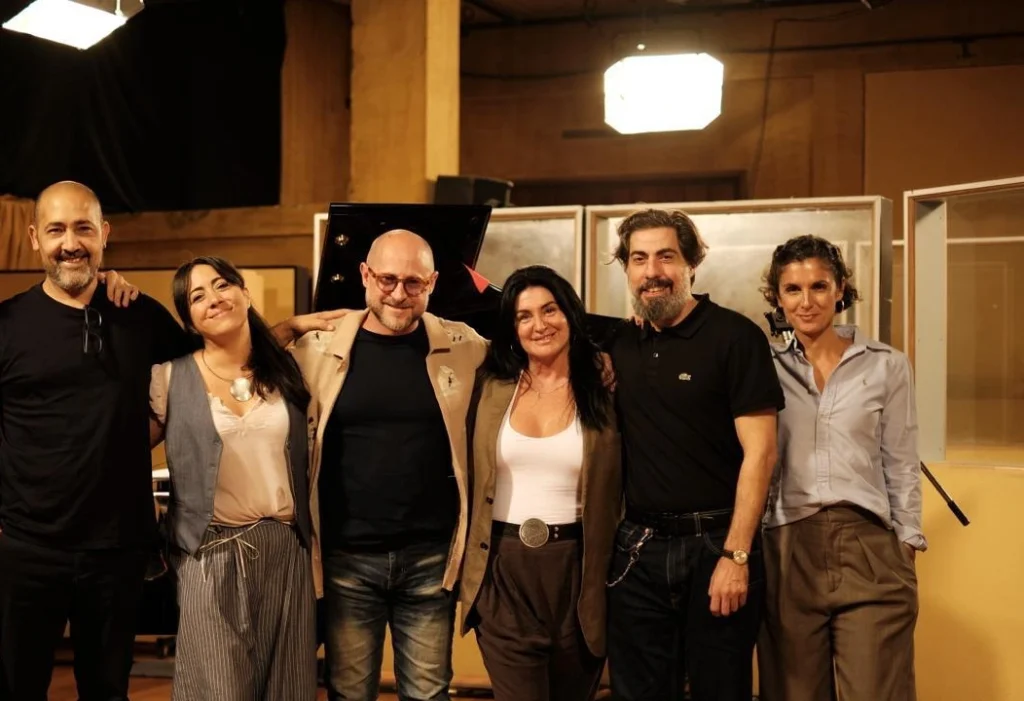
We believe in honoring the tradition with world-class live musicians who understand its legacy. Our show features Horacio Romo, an internationally renowned bandoneonist celebrated for his haunting and passionate playing. He has served as musical director for Tango Argentino and Forever Tango, and his performance of Piazzolla’s Bandoneón Concerto even earned him an Emmy Award.
This is your chance to hear the instrument’s true, passionate voice up close, in an intimate setting that respects the music.
Book your intimate musical experience at Secreto Tango Society here.
Your might be wondering…
What’s the main difference between Bandoneon and Accordion?
The main differences are sound and mechanics. While the first one has a darker, more melancholic sound and is (usually) bisonoric (plays a different note when pushing or pulling the bellows), the accordion is often unisonoric (same note both ways) and has a brighter, more uniform sound.
Is the bandoneon hard to play?
Its complex, non-linear button layout (unlike a piano) combined with the bisonoric system (requiring the player to learn two different note maps for opening and closing the bellows) makes it notoriously difficult to master, but of course, not impossible.
Who is the most famous bandoneon player?
While Aníbal Troilo is a legend from the Golden Age, Astor Piazzolla is the most famous bandoneon player internationally, known for revolutionizing the genre and creating “Nuevo Tango.”
A Note on the Feeling
My favorite part about the bandoneon—beyond the fact that the musicians who play it seem like total geniuses, with a level of mind-body coordination I can’t fully comprehend—is the deep nostalgia its sound evokes.
It’s strange, and in a way mystical, how certain sounds can trigger such a powerful feeling of melancholy.
In the end, we’re talking about a captivating instrument, and it is truly worthy of being heard and felt live. Secreto Tango Society is the spot!