To understand music in Argentina, you have to look at the map. We are a massive, beautifully chaotic country, and our soundtrack is just as vast. The sound of the dry mountains in the north has absolutely nothing to do with the melancholic, damp asphalt of Buenos Aires or the relentless energy of Córdoba.
These distinct sounds didn’t just happen by chance; they were forged by deep geographical, historical, and social factors. Different regions welcomed different waves of immigrants, had access to different raw materials to craft their instruments, and developed entirely different daily struggles.
But if there’s one thing that unites this sprawling territory, it’s how fiercely we consume sound. We are heavy listeners, dominating streaming charts across Latin America, but digital numbers don’t tell the real story. For us, music is a contact sport. The cultural significance of live shows in Argentina cannot be overstated. We don’t just attend concerts; we live for the shared sweat of a crowded venue, the vibration of the bass in our chests, and the catharsis of chanting lyrics until our throats give out. We go to live shows to belong, to release tension, and to be part of a ritual.
As hosts who breathe this culture every single night, we are going to walk you through the real rhythms of the country. We are breaking down the foundational pillars of our sound: the intimate grief of Tango, the deeply rooted storytelling of Folklore, the fierce resistance of Rock Nacional, and the unapologetic joy of Cuarteto. We’ll give you the iconic artists to look up, the essential tracks you need to hear, and decode exactly what happens when the lights go down and the legendary Argentine crowd takes over.
Tango: The Sound of the Asphalt and the Immigrant Soul
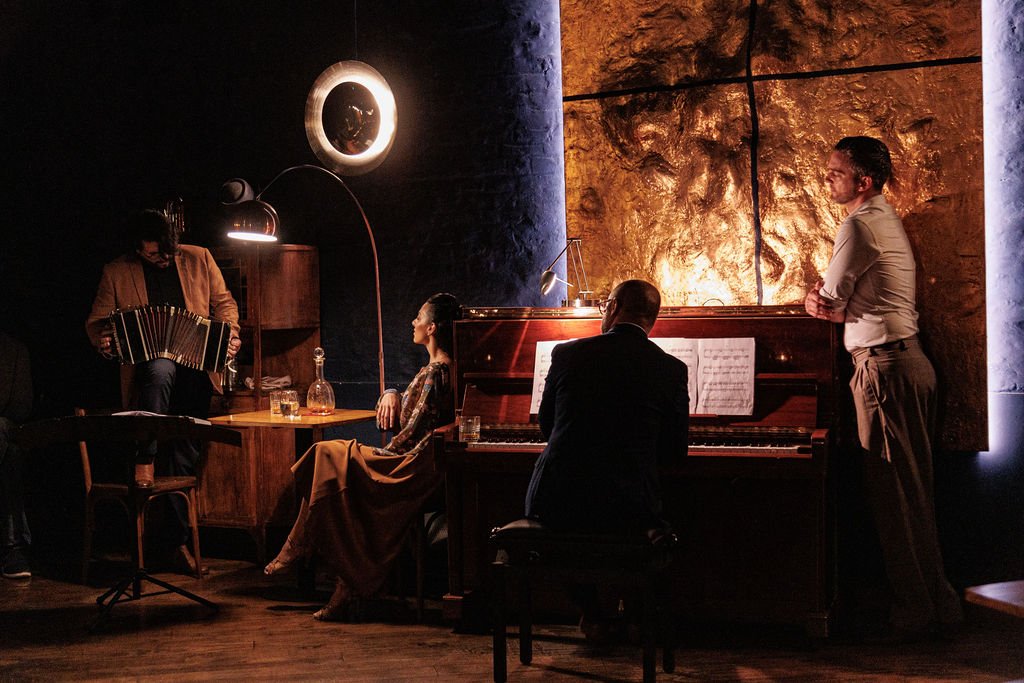
Tango belongs to the wet pavement, the harbor, and the dim streetlights of Buenos Aires. It is a strictly urban lament. Born in the late 19th century in the absolute margins of the city, the arrabales and the crowded tenement houses, Tango is the result of a fierce cultural collision. It was forged by European immigrants, African rhythms, and displaced locals all living shoulder-to-shoulder, trying to survive in a rapidly expanding city. Because of these gritty roots, the genre cannot be boxed into a single feeling: it is deeply melancholic, undeniably sensual, and at times, heavily laced with nostalgia.
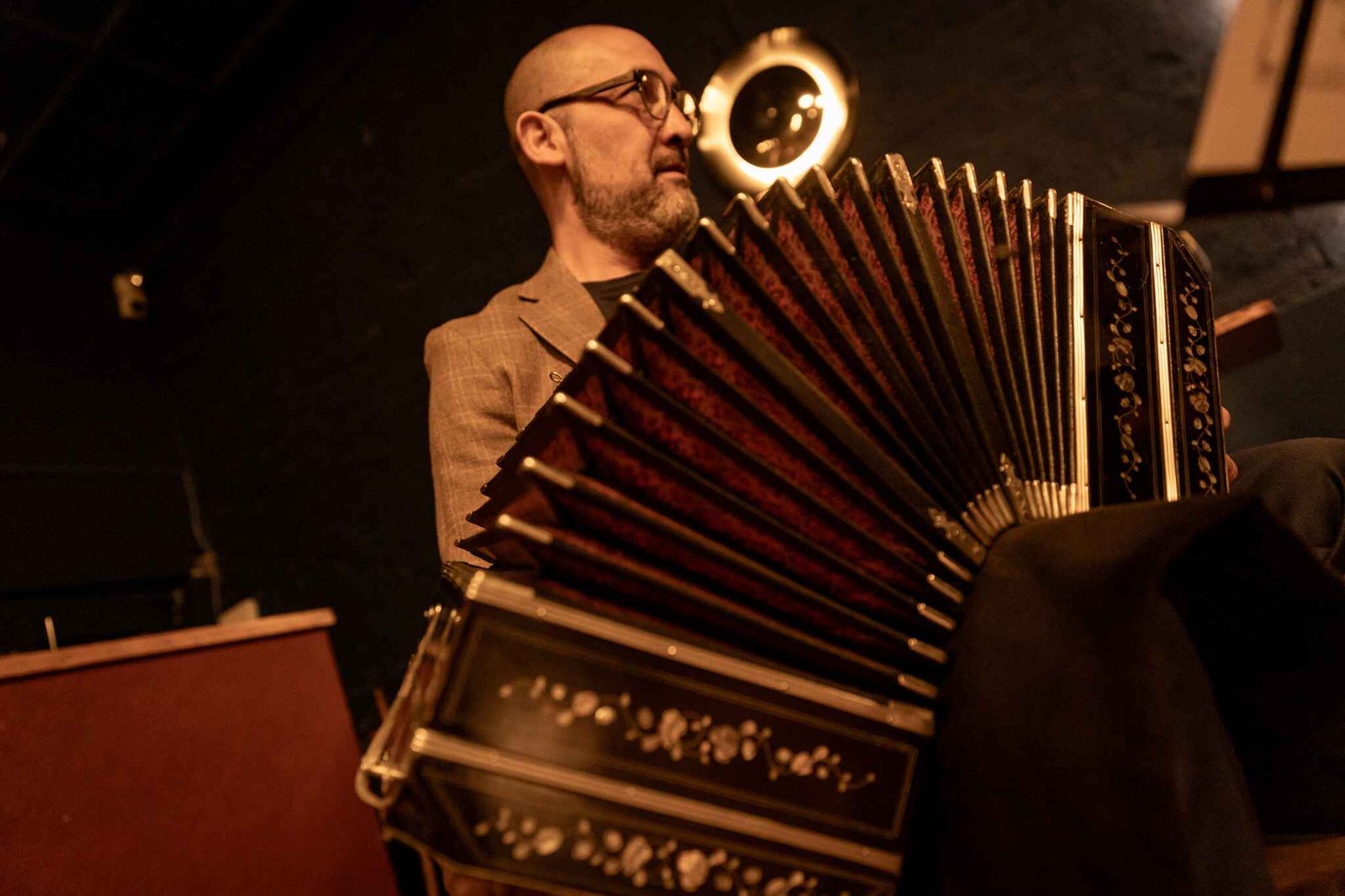
It is a genre built on the heavy, breathing sound of the bandoneón, an instrument that literally sounds like it’s weeping. And while the rest of the world knows Tango as a polished dance of sharp leg flicks, for us, it is much darker and much more profound. It is a tight, uninterrupted embrace: a silent conversation between two people sharing their loneliness for three minutes.
The Icon: Carlos Gardel
If Mercedes Sosa is the mother of the land, Carlos Gardel is the god of the city. Known as El Zorzal Criollo, Gardel didn’t just sing tango; he was the great pioneer of the tango-canción (tango with lyrics). Much like Mercedes, he often interpreted songs written by others, yet the moment his voice touched a melody, it became eternally his. With his perfectly slicked-back hair, a baritone voice that dripped with charisma, and a smile that made him the absolute love of our grandmothers, he took the genre to global heights. Tragically dying in a plane crash at the absolute peak of his fame in 1935, Gardel became a myth.
The Essential Track: “Mi Buenos Aires querido”
There is a never-ending, passionate debate over where Carlos Gardel was actually born. Some historians swear he is from Toulouse, France, while others will defend with their lives that he was born in Tacuarembó, Uruguay. But to us, his passport is entirely irrelevant. Listen to “Mi Buenos Aires querido” (My Beloved Buenos Aires), and you will immediately know exactly where he felt he was from.
The Secreto Tango Society Experience
We know exactly what the typical “Tango Show” has become: a plastic, over-produced spectacle meant to sell overpriced steaks to tourists. That is exactly what we exist to dismantle.
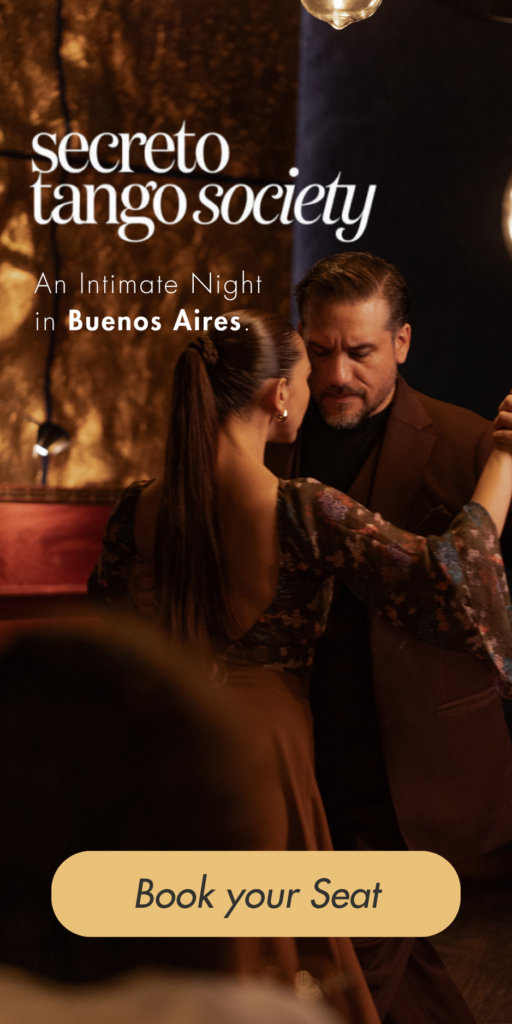
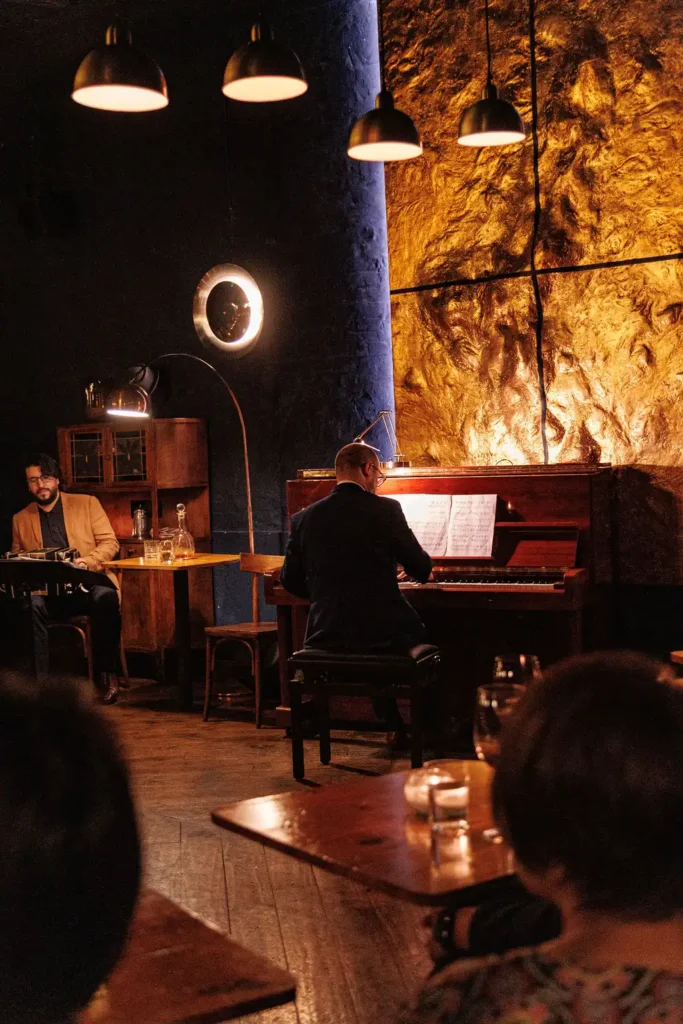
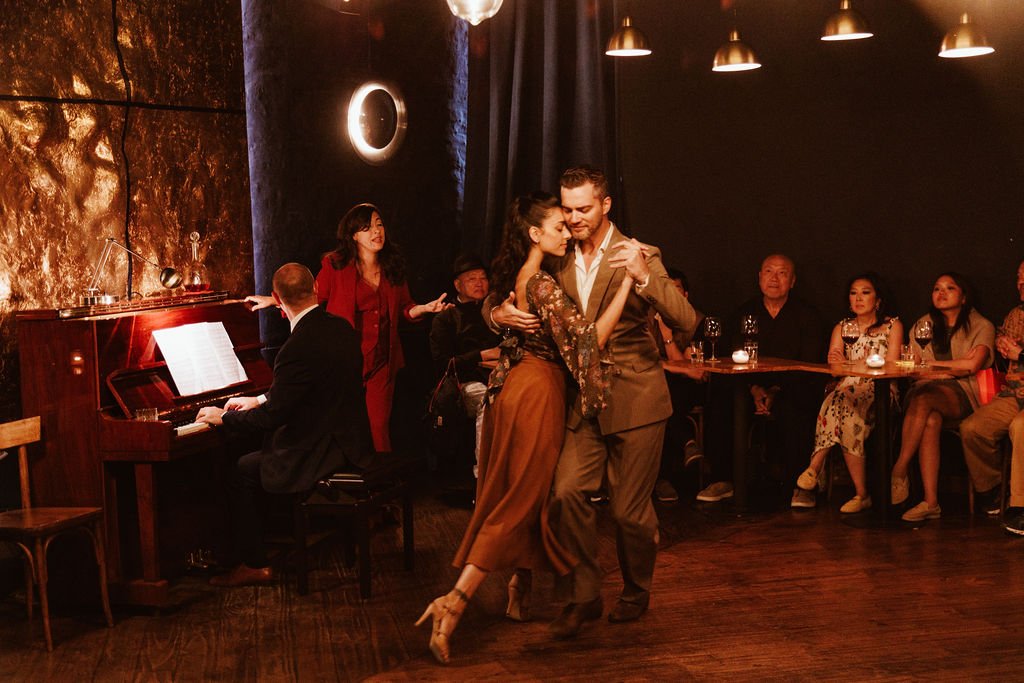
At Secreto Tango Society, we are insiders taking you behind the velvet rope and into the absolute underground of the local culture. We don’t do clichés. We host an immersive, raw experience that honors the true grit and passion of the genre. When you step into our world, you are experiencing Tango exactly as it was meant to be felt: intimate, unapologetic, and fiercely authentic. We don’t just show you the steps; we pull you into the ritual.
Argentine Folklore
Let’s break down the word itself. “Folk” means the people, and “lore” means their traditional knowledge, customs, and stories. By that strict definition, every single rhythm we cover in this guide is technically our folklore. They are all the stories of our people.
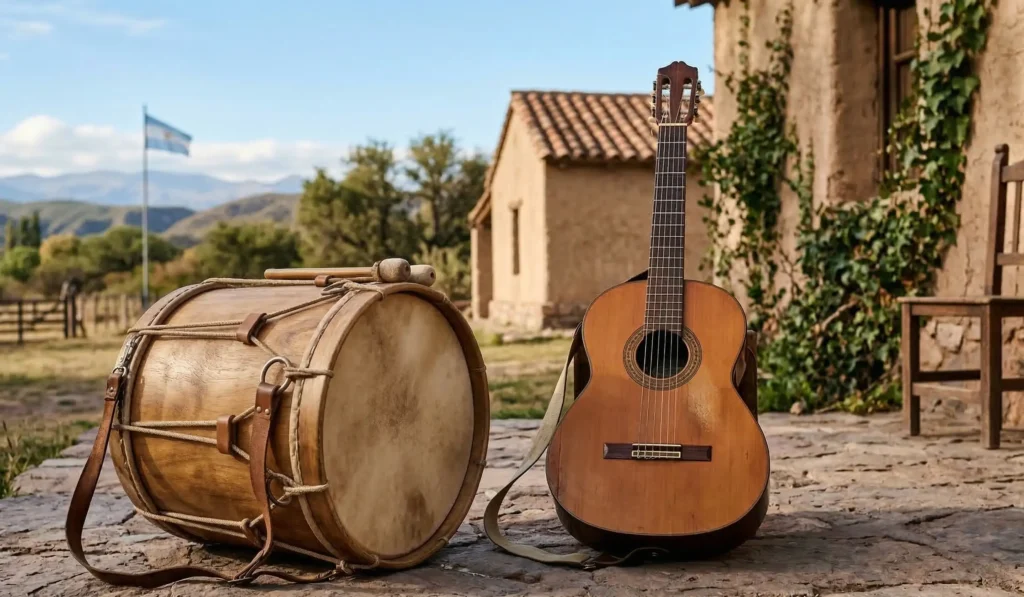
But if you ask an Argentine on the street, the word has a very specific, fiercely protected meaning. In our daily lives, Folklore (with a capital F) refers strictly to the traditional music of the the provinces outside the capital. It’s the soundtrack of the countryside, deeply tied to the rural, gaucho culture, the high mountains of the north, and the vast plains. It isn’t just one rhythm; it’s an umbrella term for intensely regional sounds. It’s the fast-paced, stomping rhythm of the chacarera, the deeply romantic and swaying zamba, and the lively chamamé. It relies on the guitarra criolla, our local, nylon-string acoustic guitar that sits in the corner of almost every Argentine home, unpretentious and always ready to be passed around at a late-night peña or a Sunday barbecue. Paired with the deep, thumping heartbeat of the bombo legüero (a traditional wooden drum), these instruments create a profound, unmistakable connection to the landscape.
The Icon: Mercedes Sosa
You simply cannot talk about Argentine music without bowing to Mercedes Sosa, affectionately known as La Negra Sosa. It feels almost too poetic, yet completely fitting, that she was born on July 9th, Argentina’s Independence Day.
The most fascinating thing about her legacy is that she wasn’t a songwriter; she was an interpreter. Yet, when she sang a song, she claimed it permanently. In a way that defies logic, her voice feels entirely native. It sounds as if it were pulled directly from the roots of the land. In fact, there is a hilarious, shared phenomenon among Argentines born in the 2000’s: when we were kids, an entire generation of us genuinely believed she was literally La Pachamama (Mother Earth) in the flesh. It was illogical, childish thinking, but it’s fascinating that so many of us independently made that exact same association. We subconsciously gave her a direct, mythical connection to nature because that is exactly what her presence felt like. Her voice is a commanding, raw, and overwhelmingly emotional instrument that carries the historical weight of an entire region.
The Essential Track: “Zamba para olvidar”
If you want to understand this genre, listen to “Zamba para olvidar” (Zamba to forget). Written by Julio Fontana and set to music by the legendary Daniel Toro, this is an anthem of a love that refuses to stay in the past.
Did you know? In 2009, shortly before her death, Mercedes Sosa released a massive, two-volume conceptual project called Cantora. It was an unprecedented cultural event. She gathered the most fundamental artists from all over the country to sing alongside her. In those sessions, she effortlessly connected the entire Argentine sonic map. It moved the whole nation.
Rock Nacional: The Soundtrack of Resistance
In most parts of the world, classic rock is a nostalgia trip. In Argentina, Rock Nacional is the air we breathe. It is our cultural backbone. During the dark, suffocating years of the military dictatorships in the 1970s and 80s, singing in English was banned, and youth gatherings were highly suspicious. Rock Nacional became a matter of survival. It was a secret language of metaphors and poetry that allowed an entire generation to scream against censorship without getting arrested.
Today, that DNA of defiance still runs hot. Rock in Argentina isn’t something you politely nod your head to. It is fierce, it is loud, and it is deeply emotional. When you go to a rock concert here, the band on stage is only half the show; the other half is the crowd, turning every guitar riff into a massive, chanting choir.
The Icon: Charly García
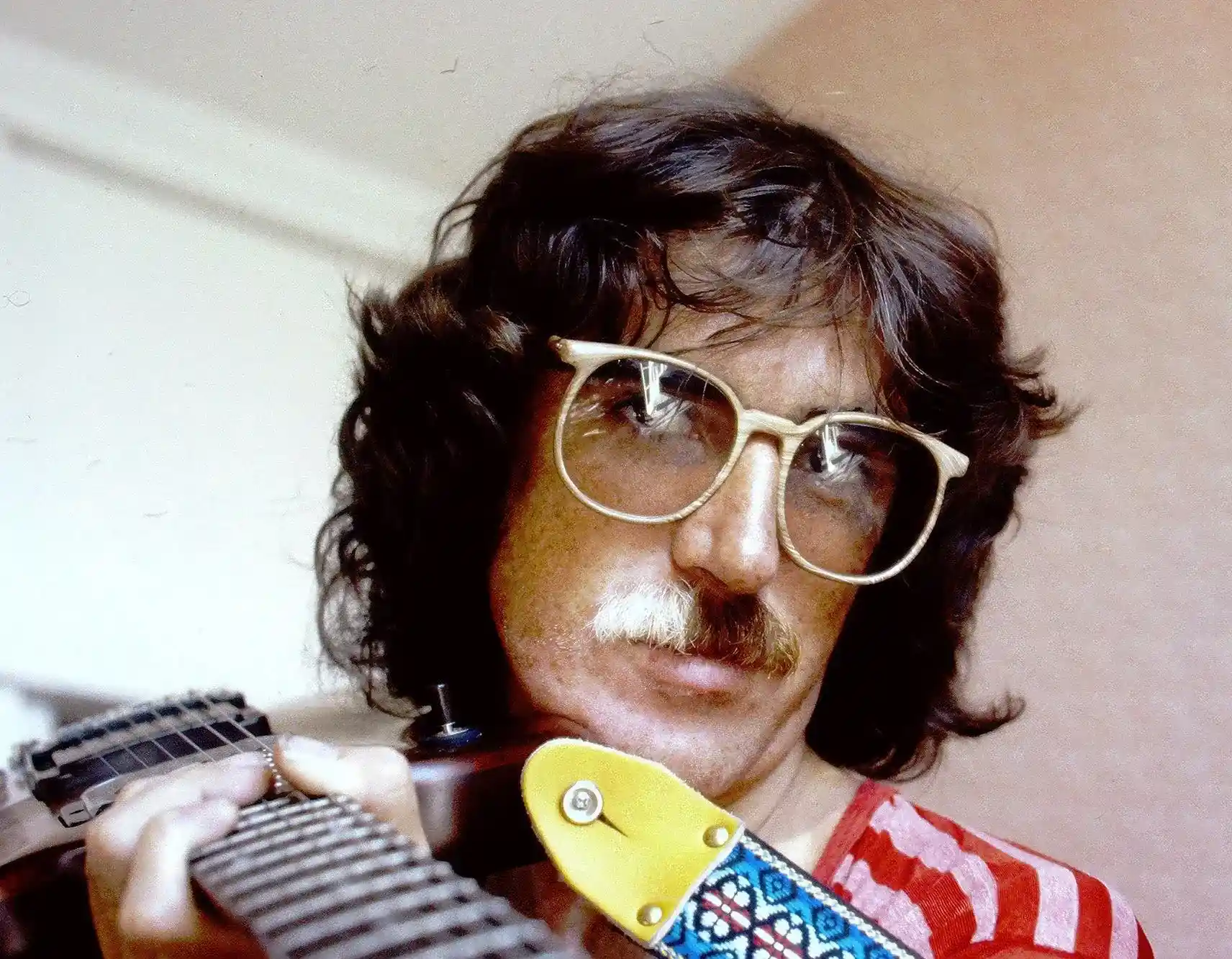
While Gustavo Cerati and Soda Stereo took the genre to unmatched international fame, the undisputed, bleeding heart of the country is Charly García. He is our absolute musical genius, our rebellious prophet, and our exposed nerve. With his trademark half-white mustache and disdain for authority, Charly possesses a classical music background that he deliberately fractured to create the most complex, chaotic rock in the Spanish-speaking world. He sang what nobody else dared to say when it was dangerous to speak at all.
The Essential Track: “Seminare”
Written by Charly for his legendary band Serú Girán, “Seminare” is the masterpiece of our rock history. It isn’t a heavy, aggressive track; it is an agonizingly beautiful rock ballad.
If you want to witness the cultural significance of live shows in Argentina, check this video of Charly playing “Seminare” live in the pouring rain at a packed stadium. You will hear eighty thousand people screaming every single word, crying, and drowning out the sound of the band completely. It is a unifying, visceral catharsis that you simply won’t find anywhere else on the planet.
Cuarteto: The Unapologetic Joy of the Working Class
If Tango is our sophisticated grief and Rock Nacional is our defiance, then Argentine cuarteto is an absolute survival mechanism. Writing this from the heart of Córdoba, where the genre was born and bred, we can tell you that this rhythm doesn’t just play on the radio; it dictates the pulse of the entire province.
Cuarteto was born in the 1940s as a hyper-local mutation of the talian tarantella and the Spanish paso doble brought over by immigrants. The founding bands played with just four acoustic instruments: piano, accordion, violin, and bass. That four-piece setup is exactly why the genre was named Cuarteto (quartet). Today, the bands have evolved into massive orchestras with heavy percussion and brass sections.
But the most fascinating thing about Cuarteto is its brilliant contradiction. It is the music of the working class neighborhoods, and its lyrics often tackle the ugliest, deepest, and hardest realities of life: poverty, betrayal, social marginalization, and daily struggles. Yet, it wraps these heavy themes in a frantic, upbeat, tropical rhythm dominated by piano, bass, accordion. It takes everything bad and violently forces it to be joyful. You find yourself sweating, smiling, and dancing uncontrollably to a tragedy.
If you want to know what type of music is popular in Argentina away from the tourist centers, you have to try a baile. A baile isn’t a concert; or a night at a club, it’s a ritual. It is thousands of people packed into a massive venue, sharing jugs of fernet with cola, and dancing in a relentless, swirling mass until the sun comes up.
The Icon: “La Mona” Jiménez
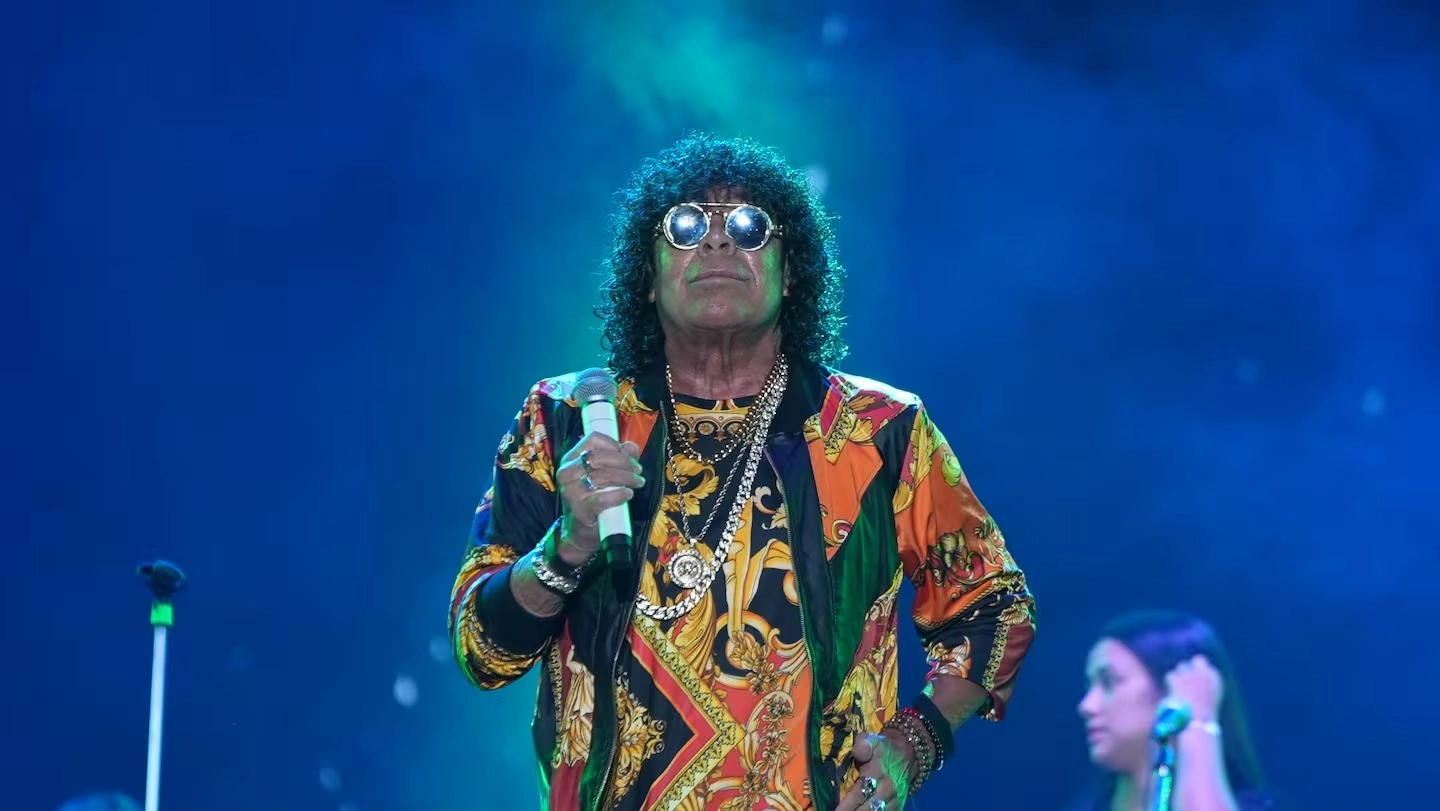
To call Carlos “La Mona” Jiménez a singer is an insult; he is a popular deity. He is the absolute idol of the working class. Continuing the thread of Gardel and Mercedes Sosa, La Mona is fundamentally an interpreter. He takes songs written by others, but the second he growls a lyric while doing his frantic, trademark hand gestures (a literal sign language for the different neighborhoods of Córdoba), he claims it entirely. He possesses the music, turning it into an anthem.
The Essential Track: “El Federal”
There is no better example of the Cuarteto paradox than “El Federal.” Lyrically, it tells a harsh, gritty story of neighborhood tragedy and irony: a father who is a federal police officer, and a son who grew up on the streets to become a thief because that same father abandoned him. It narrates the raw reality of a fractured family standing on opposite sides of the law, bound by blood but separated by destiny.
It is a profound, heartbreaking tale of abandonment, but the rhythm is so impossibly infectious and fast-paced that entire stadiums jump, spin, and celebrate to it.
The Phenomenon: Is the Argentine Crowd Really the Best Audience in the World?
Every international artist who steps foot on a stage in Buenos Aires eventually says the same thing into the microphone. But it’s not just cheap PR talk to flatter the locals. The Argentine audience is an entirely different beast. The absolute, visceral passion we bring to the terraces on a Soccer match on a Sunday, is the exact same energy we bring to a live show. It is simply how we express ourselves as a culture: with everything we have.
Honestly, sometimes I find myself in the middle of a concert, screaming the lyrics at the top of my lungs, and I have to ask myself: Did I pay for a ticket to hear the artist, or did I pay to hear myself? We just don’t know how to be passive spectators. We throw our arms in the air, we scream until our voices break, we hold up handmade signs, we cry uncontrollably, and we climb onto each other’s shoulders just to feel an inch closer to the stage.
And then, there is the ultimate physical expression of this madness: the pogo.
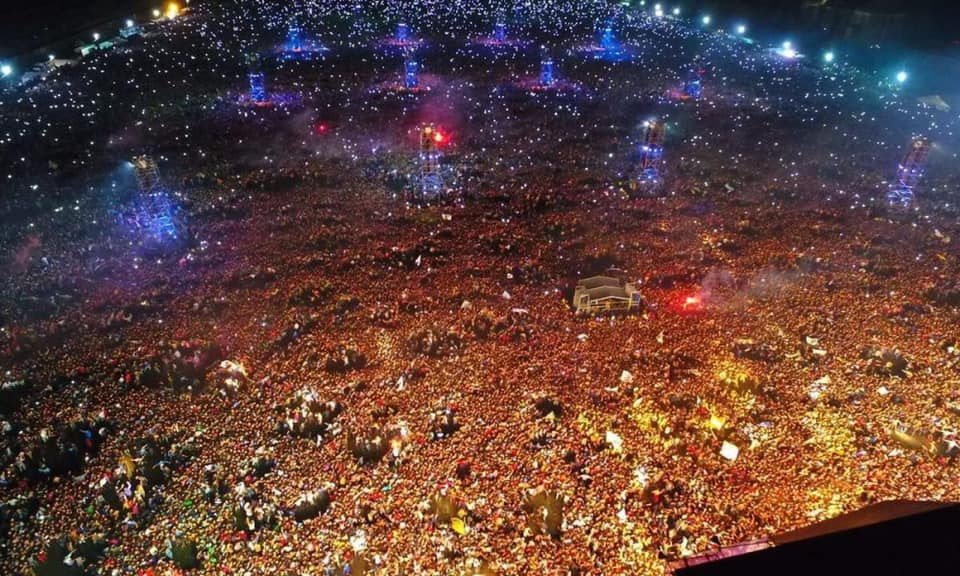
The Argentine Pogo
The Pogo is the physical manifestation of our relentless passion. If you have never been in the middle of one, it looks absolutely terrifying from the outside. But a true Argentine pogo is the exact opposite of a violent mosh pit. Somehow, it is a massive embrace.
It doesn’t happen during the whole song; it’s all about the buildup. We wait, vibrating with anticipation during the verses, until that key moment hits: the explosive chorus, the iconic guitar riff, or that one lyric that triggers our collective euphoria.
The pogo is tens of thousands of strangers jumping in perfect unison, holding each other up so nobody falls, colliding and rebounding with a smile on their faces. I know, it is deeply tribal. The pogo is our collective therapy. It is the physical release of our daily frustrations, our economic crises, and our heavy nostalgia. We don’t jump to hurt anyone; we jump to feel alive together.
The Proof is in the Noise
There is a reason AC/DC chose the monumental River Plate stadium to record their legendary live DVD, capturing a sea of humans bouncing so hard it registered on seismographs. There is a reason Dave Mustaine of Megadeth was left speechless when the Argentine crowd organically invented the “Symphony of Destruction” chant (“¡Megadeth, Megadeth, aguante Megadeth!”). It was a crowd-created vocal riff that the band now expects audiences to sing everywhere else in the world.
Earning the undisputed title of the best audience in the world isn’t just about being the loudest. It comes down to our profound, desperate need for connection. Whether it’s a gritty Rock Nacional gig, a massive Cuarteto baile, or a packed international stadium tour, when the lights go down, we stop being individuals. We become a single, roaring, weeping, chanting entity.
Why is Music so Important in Argentina
This has been a journey through the very DNA of our sound. It’s clear that music in Argentina is far more than a collection of rhythms: it is our history, our resistance, and our most honest way of being together.
We’ve mapped out the sonic pillars that define us: the sophisticated, urban grief of Tango, the deeply rooted storytelling of Folklore, the fierce and poetic defiance of Argentine Rock, and the relentless, joyful contradiction of Cuarteto. But as we’ve seen, the true magic of Argentine music doesn’t just happen on the stage. It happens in the crowd, in the pogo, and in the shared embrace of thousands of strangers who refuse to be silent.
If you are currently in Buenos Aires or planning your trip, don’t settle for the postcards. We invite you to step behind the curtain and experience the raw, unfiltered pulse of the city with us.
At Secreto Tango Society, we don’t just show you the tradition; we pull you into the ritual. Now, don’t worry, we won’t make you join a pogo (we’d like you to finish your wine without wearing it), but we will make sure you see our traditions from the front row. Whether you want to witness our unique take on the classics or dive deeper into the local culture, our doors are open for those seeking the authentic heartbeat of the south.
- Want to keep exploring? Check out our other articles on the traditions of Buenos Aires.
- Ready for the real thing? Book your spot at Secreto Tango Society and experience Tango like an insider.