An alien could actually win an Oscar, You heard that right.
With the historic industry buzz surrounding James Ortiz’s groundbreaking puppetry as Rocky, the internet can’t stop asking: why is Project Hail Mary so popular? The answer goes far beyond the stunning CGI or the fact that it is another massive Ryan Gosling movie. The film is a masterpiece because it feels incredibly, undeniably human. And honestly, a huge part of that humanity comes down to a soundtrack that hits much closer to home than I ever expected.
I’ll be completely straight with you: I am not a film critic and i’m well aware this is a tango blog. So, that’s where i’m coming from… When I sat down in the theater to watch a sci-fi blockbuster, I expected the usual cliches: the freezing void of space, extreme weirdness, and technological chaos. Maybe even some heavy-handed lesson…the classic metaphor about the chaos humanity brought upon itself. I am not criticizing it, but I’m just not a big fan of the genre and its usual tropes.
What I got instead was a profound story about survival, altruism, and the raw effort it takes to truly connect with the unknown. And the unexpected vehicle for all that emotion? Well, it’s one of the vehicles, but it’s the one I can actually weigh in on with authority: the music.
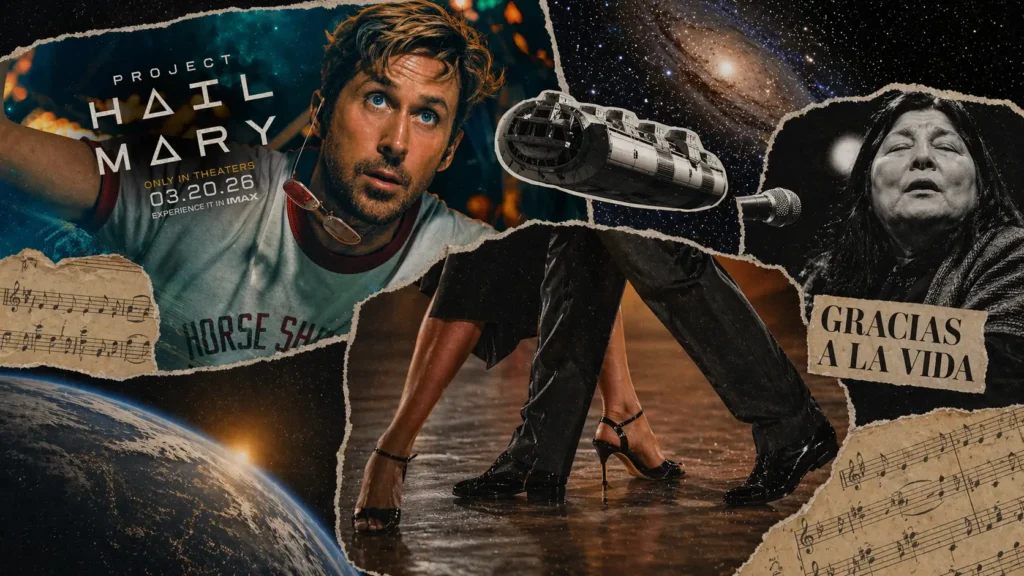
The acclaimed Project Hail Mary soundtrack isn’t a generic Hollywood orchestral score. This Earth’s survival mixtape works as a global musical journey meant to represent the planet. But what truly surprised and moved me was how, within this diverse, worldwide selection, Argentine culture was chosen to be one of the emotional anchors of the story. By taking a disruptive tango and the raw folklore of our roots into the cold of space, the film builds a soundtrack that brings us right back to our humanity.
Facing the Void: Altruism, Communication, and a Musical Journey
To understand why the story and the music work so well, you have to look at the core of the film. The plot follows Ryland Grace, a scientist who wakes up alone on a ship with a mission that would give anyone a panic attack: figure out how to save Earth from an extinction-level threat. But it’s how the story handles his journey that makes it stand out. It doesn’t shy away from his insecurities or his “imposter syndrome”.
What truly fascinated me, however, was the film’s approach to communication. It showcases a type of real altruism, stripped of cheap moralism. This isn’t about science or a hero’s complex, in fact the main character is far from that. This film is about a connection that makes sense only when you are truly facing the void. In this story, empathy isn’t a hero’s choice, but a necessity for survival.
Trying to reach out and connect with something entirely different from ourselves requires a monumental effort. It means abandoning prejudices and making our own communication logics conscious. It’s a process of learning, and more importantly, of re-learning who we are when everything familiar is gone.
The protagonist is doing exactly that, but he is also fighting an intense internal battle while carrying out his mission. This is where the music truly walks with us. It accompanies him through his struggles, his journey, and his deep sense of nostalgia. For the audience, the soundtrack becomes the language of his memories and a way to bridge the distance between the cold vacuum of space and the warmth of the Earth he once knew. As he moves further into the unknown, these sounds provide the perspective that only distance can give, acting as a constant companion in the process of knowing, and re-knowing, himself and others.
As we will see, a disruptive tango and the voice of Mercedes Sosa ground this journey, turning the silence of the void into something deeply personal and, as i said before, human.
Earth’s Survival Mixtape: Why Tango and “Gracias a la Vida” Ground the Journey
Directors Phil Lord and Christopher Miller didn’t just want a cool background score; they set out to build what they called a “mixtape of Planet Earth.” They were looking for a sensitive, global selection of sounds that could represent the grit and gratitude of the entire human race. And while the film features global icons, like the soaring, epic feel of Sign of the Times by Harry Styles, it is the music from our far end of the world that provides the real emotional gravity.
The Tango “El Amanecer”: A Disruptive Dawn in Space
Usually, when you see a high-budget spaceship on screen, you expect a certain “Hollywood vibe”: sweeping, orchestral strings or synth-heavy themes. But in one of the film’s most tense sequences, the silence is broken by a tango.
Specifically, it’s “El Amanecer” (The Dawn) by Roberto Firpo. The way i see it, it is a completely disruptive choice. As a viewer, it throws you off; it feels out of place until you realize it’s actually the only thing that fits. The directors described this as a “gravity tango.” In the world of tango, the embrace is all about physics: two bodies leaning into each other, creating a shared center of gravity to keep from falling. In the void of space, that 2×4 beat becomes a rhythmic anchor, a way to find a pulse in the middle of the chaos.
There is also a beautiful touch of Argentinocentrismo here that I can’t ignore. We are often teased for believing the world revolves around us, but seeing a Hollywood blockbuster choose a century-old Argentine tango to narrate the laws of the universe feels like a poetic vindication. It’s a brilliant way to show that even millions of miles away, the tension and balance of our culture aren’t just local, universal. In the vastness of the cosmos, it’s our rhythm providing the equilibrium.
Mercedes Sosa: The Warmth of “Gracias a la Vida”
If the tango provides the pulse, Mercedes Sosa provides the soul. There is a specific, heartbreakingly beautiful moment where “Gracias a la Vida” plays. It is the voice of the Earth, specifically the voice of “La Negra”, reminding us of the warmth left behind.
The production team clearly understood the weight behind this song. Choosing Mercedes Sosa was about finding a voice that sounds like home. In the freezing desolation of the ship, her voice acts as a telluric force, grounding the protagonist (and the audience) back in the reality of our planet.
It’s about gratitude. A profound reminder of what Earth actually is: a place of life, roots, and song. As she sings, we aren’t just in space anymore; we are traveling through our own landscapes and our own memories. It accompanies the protagonist through his nostalgia, providing the perspective needed to fight for the future by remembering exactly what makes the world worth saving.
A Musical Journey: From Space Back to Buenos Aires
When a massive Hollywood blockbuster uses a century-old tango and the voice of Mercedes Sosa to represent the soul of Earth, it proves something we have always known: our music is a universal language.
The Project Hail Mary soundtrack uses these sounds to bridge the gap between the freezing unknown and the warmth of home. Ultimately, music has that unique power: it is a way to travel without ever moving. It transports you instantly, placing you right into the middle of a culture and rhythm. The film uses our music to take the protagonist, and the audience, on a journey back to Earth, proving that you don’t need to speak the same language to feel the gravity of these sounds.
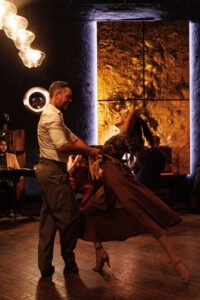
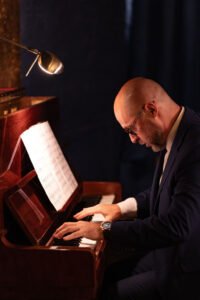

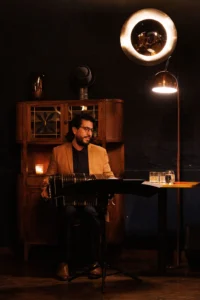
For long-time tango fans and those whose curiosity was just sparked by these short but powerful scenes, the trip doesn’t have to end when the credits roll. We invite you to keep exploring our blog for more articles on tango and Argentine music. And if you happen to be in Buenos Aires, bring the journey from the far reaches of space back to our streets.
Book a seat at Secreto to share that musical connection in person, and experience the real culture that keeps us grounded right here on Earth.
Project Hail Mary FAQ
What tango song plays in the Project Hail Mary movie?
The film features “El Amanecer” (The Dawn), a classic piece originally composed by Roberto Firpo. The directors used this 2×4 rhythm to score a highly tense zero-gravity sequence, turning the music into an anchor in the middle of space.
Who composed “Gracias a la Vida”?
The song was originally written and composed by Violeta Parra. Mercedes Sosa’s powerful rendition is the one used in the film.
Where can I watch the Project Hail Mary film? when does it come to streaming?
Currently, the only way to experience this journey and hear the soundtrack the way it was intended is in movie theaters. Because it is an Amazon MGM Studios production, it is expected to land on Prime Video in the coming months, though an official streaming date has not been announced yet.